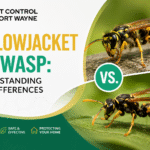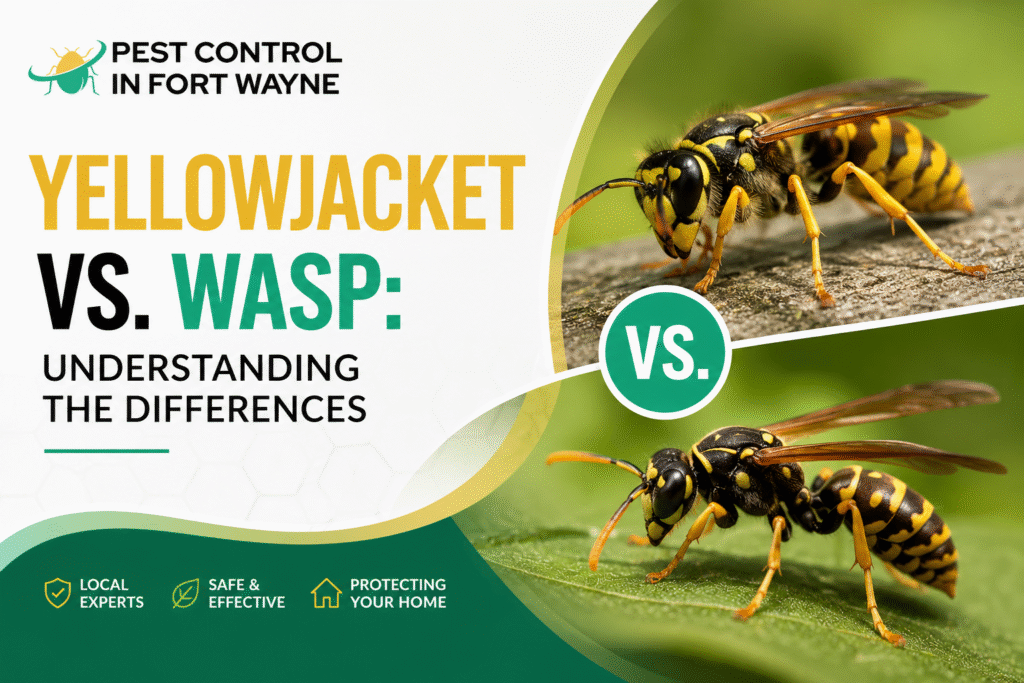
Seeing a buzzing insect around your home can make you wonder whether you are dealing with a yellowjacket or another type of wasp. While yellowjackets and wasps are closely related, they are not exactly the same. Understanding the difference between yellowjacket vs. wasp can help homeowners identify a potential nest and choose the safest way to handle the problem.
Both insects can become aggressive when their nests are disturbed, and some species may build nests around homes, garages, sheds, decks, and other outdoor areas. Learning how to recognize them is an important first step toward preventing unwanted encounters.
What Is a Yellowjacket?
Yellowjackets are a type of wasp belonging to the Vespidae family. They are usually recognized by their bright yellow-and-black markings, although their coloring can vary depending on the species.
Yellowjackets are generally smaller and more compact than many other common wasps. They are also known for their aggressive behavior, particularly when protecting their nest.
Unlike bees, yellowjackets can sting repeatedly because their stingers typically do not remain in the victim. They may also bite and sting when they feel threatened.
Yellowjackets are attracted to sugary foods, meat, garbage, pet food, and other sources of food around homes. This is why homeowners may notice them around outdoor meals, trash cans, gardens, and patios.
What Is a Wasp?
“Wasp” is a broad term used for thousands of different species. Yellowjackets are technically wasps, but not every wasp is a yellowjacket.
Common wasps found around homes can include paper wasps, mud daubers, hornets, and other species. Their appearance and behavior can vary considerably.
Many wasps have slender bodies with narrow waists and longer legs. Some species have brown, black, reddish, or yellow markings.
Wasps may feed on insects, nectar, fruit, and other food sources. Some species are helpful predators because they consume insects that can damage gardens and plants.
Yellowjacket vs. Wasp: Key Differences
One of the easiest ways to understand the difference is to compare their appearance, behavior, nesting habits, and food preferences.
Appearance
Yellowjackets generally have distinctive yellow-and-black patterns and relatively compact bodies. Their markings can make them look similar to bees, although their body shape is typically smoother and less hairy.
Other wasps can have much more variation in color. Paper wasps, for example, are often brownish or reddish with yellow markings and have noticeably long legs.
Behavior
Yellowjackets are often considered more defensive and aggressive than many common wasps. They can become particularly protective when someone gets close to their nest.
Some wasps are less likely to aggressively defend their nests unless directly threatened.
However, behavior varies by species and situation. Homeowners should never assume that an insect is harmless simply because it appears calm.
Nest Location
Yellowjackets can build nests in several locations. Some species construct nests underground, while others may nest inside wall voids, attics, roof areas, or other protected spaces.
Paper wasps commonly build open, umbrella-shaped nests underneath eaves, porch ceilings, railings, and other sheltered structures.
Nest location can therefore provide an important clue when identifying the insect.
Diet
Yellowjackets are attracted to sweets, proteins, garbage, and food left outdoors. Their interest in human food can make them especially noticeable during warm-weather gatherings.
Many wasps primarily hunt insects or consume nectar and other natural food sources.
How to Identify a Yellowjacket Nest
Identifying the insect is only part of the process. Finding the nest can help determine whether there is an active infestation.
A yellowjacket nest may be hidden underground or inside a protected structure. You may notice increased insect activity around a particular hole in the ground, crack, wall opening, roofline, or other entry point.
Never poke, kick, spray, or otherwise disturb a suspected nest. Yellowjackets may respond quickly when they believe their colony is under attack.
Are Yellowjackets More Dangerous Than Wasps?
Both yellowjackets and wasps can sting, so neither should be handled casually.
Yellowjackets can be especially troublesome because they may repeatedly sting when defending their nest. A person who accidentally steps near an underground nest, for example, could suddenly encounter multiple insects.
For most people, a sting causes temporary pain, redness, swelling, and irritation. However, some individuals can experience severe allergic reactions.
If someone develops symptoms such as difficulty breathing, swelling of the face or throat, dizziness, or other signs of a serious allergic reaction after a sting, seek emergency medical attention immediately.
Why Yellowjackets and Wasps Build Nests Around Homes
Homes provide many of the conditions these insects need to survive.
Outdoor structures can offer sheltered nesting locations, while gardens and landscaping provide insects, nectar, and other food sources. Garbage cans, outdoor pet food, fallen fruit, and sugary drinks can also attract yellowjackets.
Small openings around siding, roofs, vents, windows, and foundations may provide access to protected areas.
Reducing these attractants can help make your property less appealing to stinging insects.
How to Prevent Yellowjackets and Wasps
Homeowners can take several basic steps to reduce the chances of attracting these pests.
Keep Food and Drinks Covered
When eating outdoors, keep sugary beverages, meat, fruit, and other food covered whenever possible. Clean up spills promptly.
Secure Garbage
Use tightly sealed garbage containers and clean food residue from outdoor bins regularly.
Remove Fallen Fruit
Overripe or fallen fruit can attract yellowjackets and other insects. Pick up fruit from the ground and keep garden areas maintained.
Seal Potential Entry Points
Inspect your home for cracks and openings around windows, doors, rooflines, vents, and utility penetrations. Sealing suitable entry points can reduce opportunities for insects to establish nests inside structures.
Inspect Outdoor Areas
Check areas such as decks, sheds, porches, eaves, and landscaping for unusual insect activity. Early identification can make it easier to address a developing problem.
When Should You Call a Pest Control Professional?
If you discover a large nest, repeated yellowjacket activity, or insects entering and leaving a wall or other inaccessible area, professional assistance may be the safest option.
Attempting to remove an established nest yourself can result in multiple stings, particularly if the nest is hidden underground or inside a structure.
A professional can identify the insect, locate the source of the activity, and recommend an appropriate treatment strategy.
Yellowjacket vs. Wasp: The Bottom Line
The biggest point to remember is that yellowjackets are wasps, but not all wasps are yellowjackets. Yellowjackets typically have recognizable yellow-and-black markings, compact bodies, and a reputation for aggressively defending their nests.
Other wasps can vary widely in appearance, nesting habits, and behavior. Understanding these differences can help you recognize a potential problem before it becomes more serious.
If you are unsure what type of stinging insect is around your property, avoid disturbing the nest and consider contacting a qualified pest control professional for identification and treatment.
Frequently Asked Questions
Are yellowjackets and wasps the same thing?
Yellowjackets are a type of wasp, but the term “wasp” includes many different species. Paper wasps, mud daubers, and hornets are examples of other types of wasps.
Which is more aggressive, a yellowjacket or a wasp?
Yellowjackets are generally considered more defensive, especially when their nest is disturbed. However, individual behavior varies among species and circumstances.
Do yellowjackets sting more than once?
Yes. Unlike honey bees, yellowjackets can generally sting repeatedly because their stingers are not typically left behind after a sting.
Where do yellowjackets build nests?
Depending on the species, yellowjackets may build nests underground, inside wall voids, under structures, in attics, or in other protected locations.
Should I remove a yellowjacket nest myself?
Removing an established nest can be risky because yellowjackets may aggressively defend it. Professional pest control is often a safer choice, particularly when the nest is large, hidden, or located near an entrance to the home.
How can I keep yellowjackets away from my property?
Keep garbage sealed, cover outdoor food and drinks, clean spills, remove fallen fruit, maintain landscaping, and seal potential entry points around your home.