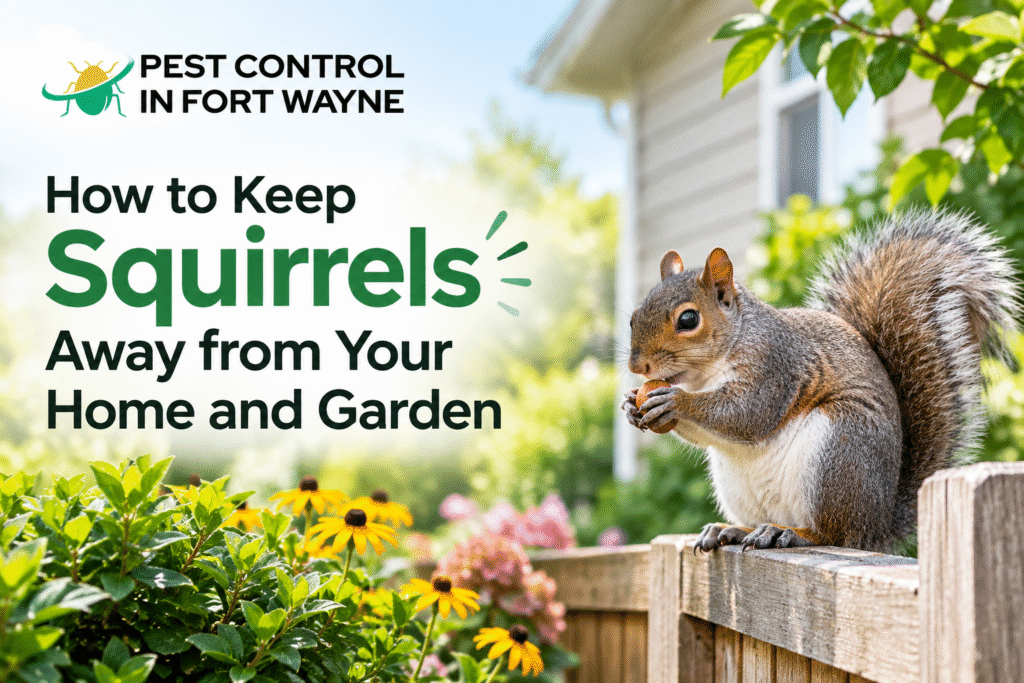
If you live in Fort Wayne, you’ve probably watched a squirrel dash across your yard, scale a fence, or disappear into a gap under your roofline without giving it a second thought. Squirrels are part of the everyday scenery here, and most of the time they keep to themselves. But once they decide your garden is a good food source or your attic is a good place to spend the winter, they stop being background noise and start being a genuine problem. Dug-up flower beds, stripped bark, chewed wiring, and insulation torn apart for nesting material are all common complaints from homeowners across the region.
The good news is that squirrels are creatures of habit and opportunity. They go where the food is easy, and the shelter is convenient. Remove those two things, and most squirrels will move along on their own. Here’s a full breakdown of how to protect both your garden and your home.
Why Squirrels Target Your Property in the First Place
Squirrels don’t pick a yard at random. They’re drawn in by three specific things: reliable food, standing water, and safe shelter. A property with bird feeders, fruit trees, vegetable or bulb gardens, or trash cans without secure lids checks the “food” box immediately. Overhanging tree branches, damaged fascia boards, loose roof shingles, and gaps around vents or chimneys check the “shelter” box. Once a squirrel finds both on the same property, it has very little reason to leave, and it may even attract others.
Understanding this is the key to effective squirrel control. Traps and repellents can help in the short term, but if the underlying food and shelter sources are still there, new squirrels will simply move in to replace the ones you removed.
Protecting Your Garden
Gardens are often the first casualty of a squirrel problem, particularly in spring when bulbs go into the ground and fall when nuts and seeds are being cached for winter. Here’s how to reduce the damage:
Install physical barriers. Chicken wire or hardware cloth laid flat over the soil in garden beds, or formed into a cage over raised beds, prevents squirrels from digging without blocking your plants’ growth. Buried edges a few inches deep stop them from tunneling underneath.
Choose plants squirrels tend to avoid. Daffodils, alliums, hyacinths, and fritillaria are generally left alone because of their taste or toxicity. Tulips and crocuses, on the other hand, are practically squirrel candy, so consider swapping them out or protecting them specifically.
Rethink your bird feeders. Feeders are one of the biggest squirrel magnets around. A baffle, either dome-shaped or cone-shaped, mounted below a pole-hung feeder makes climbing difficult. Weight-sensitive feeders that close off access under a squirrel’s weight are another option. Moving feeders at least 10 feet from trees, fences, or anything else a squirrel could jump from also helps.
Clean up fallen fruit, nuts, and seed debris regularly. Windfall fruit and dropped birdseed left on the ground is a steady food supply. A quick daily or weekly cleanup removes the incentive to stick around.
Use repellents strategically. Predator urine granules, capsaicin-based sprays, and commercial squirrel repellents can discourage feeding in specific areas, though most need to be reapplied after rain or watering. These work best as a supplement to barriers, not a replacement for them.
Protecting Your Home
Garden damage is frustrating, but a squirrel getting into your attic or walls is a much more expensive problem. Once inside, they can chew through wiring (a fire hazard), shred insulation for nesting, and leave behind droppings and odors that require professional cleanup.
For homeowners looking for Pest Control in Fort Wayne, Indiana, addressing these entry points early can help prevent a small wildlife problem from becoming a costly home repair.
Trim tree branches back from the roofline. Squirrels are excellent jumpers, but they’d still rather walk. Branches within 6 to 8 feet of your roof give them an easy bridge onto your home. Cutting them back removes that access point entirely.
Inspect and seal potential entry points. Walk the exterior of your home and look closely at the roofline, soffits, fascia boards, vents, and any area where different building materials meet. Squirrels can squeeze through openings as small as an inch and will gnaw larger holes in soft materials like wood or vinyl. Steel mesh or heavy-gauge hardware cloth is far more effective than caulk or foam, which squirrels can chew through easily.
Cap your chimney. An open chimney flue is one of the most common squirrel entry points into a home. A properly fitted chimney cap solves this permanently and also keeps out birds and raccoons.
Screen your attic and soffit vents. Vents provide airflow but also an opening squirrels are quick to exploit. Fitting them with metal screens maintains ventilation while blocking access.
Secure trash and outdoor food storage. Bins with locking or clamped lids remove an easy, reliable food source that keeps squirrels coming back to the same spot.
When a Professional Should Step In
If you can hear scratching in your attic, notice chewed entry holes, or find nesting material like shredded insulation, it’s time to call in a professional rather than attempt DIY removal. Squirrels can be surprisingly aggressive when they feel trapped, and if there are young in a nest, removing the mother without knowing they’re there can result in orphaned babies, a problem that’s both inhumane and often creates a stronger odor issue after they don’t survive.
Professionals also know how to identify and seal every entry point, not just the obvious one, since squirrels frequently use more than one access route. If you are dealing with an active squirrel problem and need assistance, Contact us to discuss your situation and determine the appropriate next steps.
Building a Long-Term Prevention Plan
Squirrels are persistent, so a single fix rarely solves the problem for good. The most effective approach combines three things: removing food sources, sealing off shelter opportunities, and using deterrents where needed. Seasonal inspections, especially in early fall before squirrels start looking for winter denning sites, let you catch small vulnerabilities, a loose vent screen, a gap in the fascia, before they turn into a full-blown infestation.
With a bit of consistent maintenance, most Fort Wayne homeowners can keep their yards squirrel-friendly to look at and squirrel-free where it counts. If squirrels have already moved into your home or your garden isn’t responding to DIY deterrents, our team can inspect your property, identify entry points, and put together a humane removal and exclusion plan built around your specific situation.