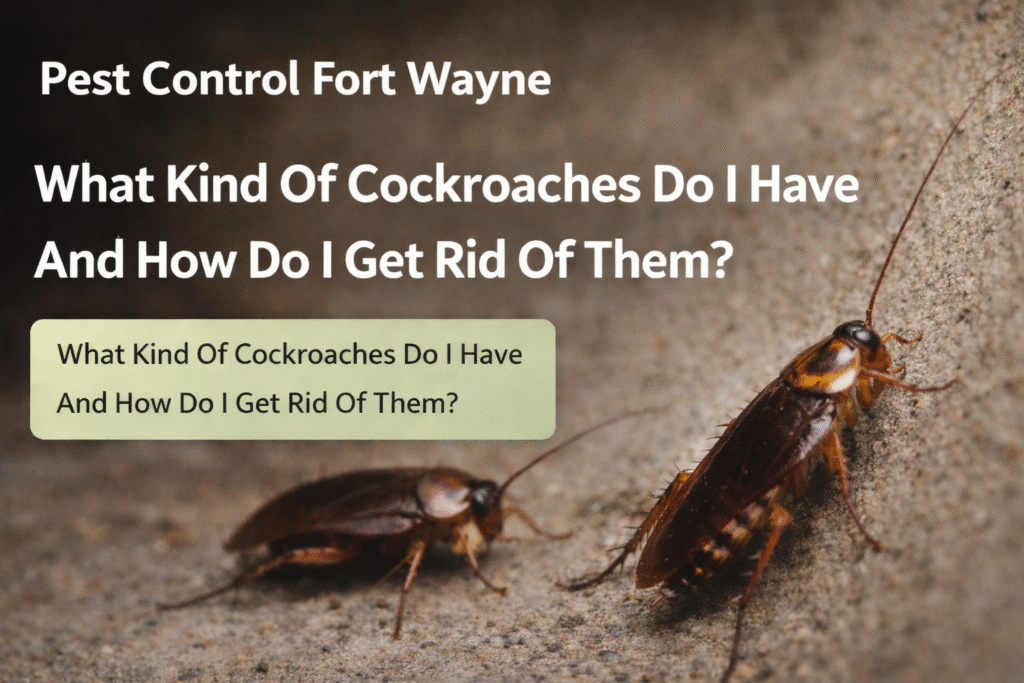
Finding a cockroach in your home is one of the most unsettling pest experiences there is — and for good reason. These resilient insects multiply fast, hide where you can’t see them, and can pose real health risks to your household. If you’ve spotted one in your Fort Wayne home or business, here’s everything you need to know about identifying what you’re dealing with and why calling a professional is your best move.
Why Cockroach Identification Matters
With thousands of known cockroach species worldwide, only a small number are commonly found inside homes and businesses here in Indiana. But knowing which species has moved in makes all the difference in how you treat the problem. Each species behaves differently — some come from outside through cracks, others travel via sewers, and some hitch rides in on infested goods. Misidentifying the roach means you might treat the wrong areas entirely.
Below, we break down the cockroach species you’re most likely to encounter in Fort Wayne, Indiana homes.
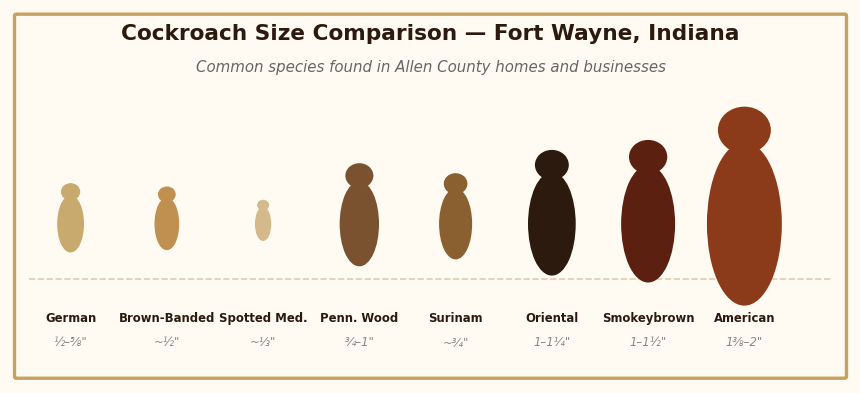
Common Cockroach Species Found in Fort Wayne, Indiana
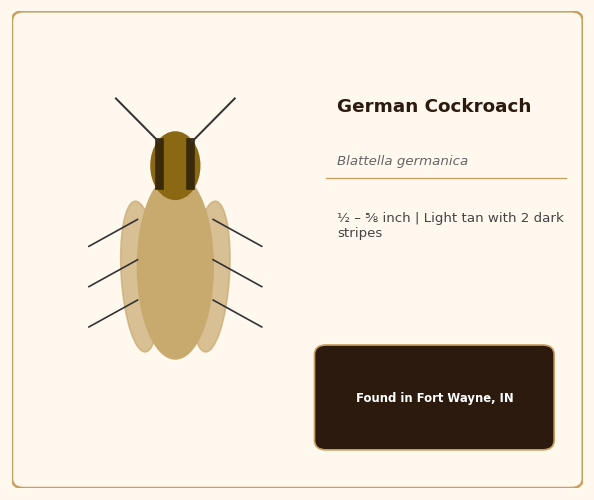
1. German Cockroach
The German cockroach is the #1 most problematic roach species in Indiana — and across the country. Adults are small, typically half an inch to just under an inch in length, with a tan or light brown color. The telltale sign? Two dark parallel stripes running behind their head.
These roaches love warmth and moisture, making kitchen appliances a favorite hideout. Check behind your refrigerator, beneath the dishwasher, and under the oven. Despite having wings, German cockroaches do not fly. What makes them especially difficult to control is their rapid reproduction — a single female can produce hundreds of offspring in her lifetime. If you see one German cockroach, there are almost certainly dozens more hiding nearby.
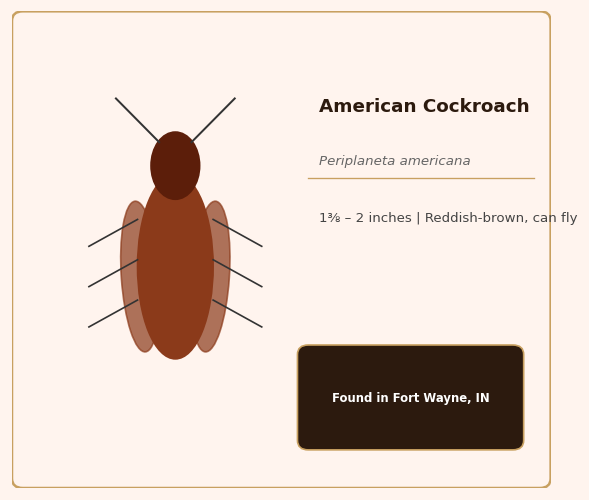
2. American Cockroach
The American cockroach is the largest roach species commonly found in Fort Wayne structures, ranging from 1.5 to 2 inches long. These are the reddish-brown roaches with a distinctive light-colored marking on the plate just behind their head. Unlike the German cockroach, American cockroaches can fly.
American cockroaches thrive in warm, damp environments like basements, boiler rooms, and — most commonly — sewer systems. If you suddenly notice a large number of them inside your home, that’s often a signal that a nearby sewer line has cracked or a plumbing trap has dried out, giving them an entry point into your home.
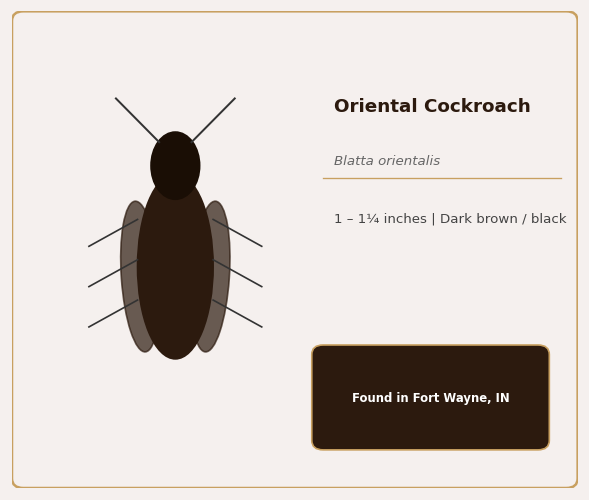
3. Oriental Cockroach
Oriental cockroaches are dark brown to nearly black and measure about one inch in length. Unlike many of their relatives, they’re more cold-tolerant and can survive in cooler parts of a building like damp basements, floor drains, and crawl spaces. Females have no wings; males have wings that cover only about three-quarters of their body. These roaches are closely associated with sewer systems, garbage, and other filthy environments — making their presence a sanitation red flag.
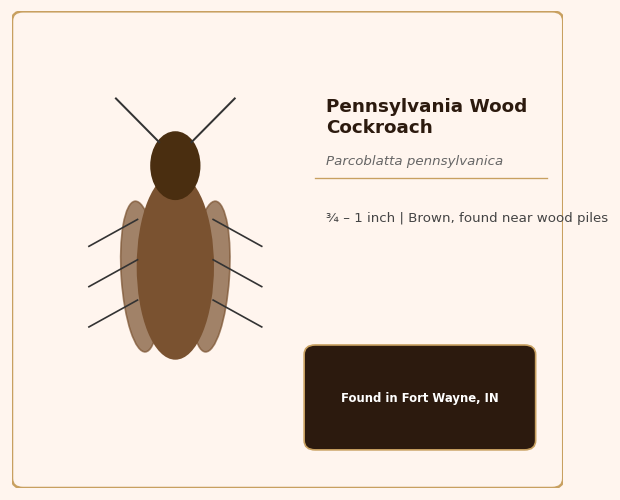
4. Pennsylvania Wood Cockroach
The Pennsylvania Wood Cockroach is a native species to this part of the U.S. and is usually found outdoors rather than inside homes. Males are about one inch long with full wings and are attracted to outdoor lights at night, which is how they occasionally wander inside. Females are smaller and do not have full wings. Because this species doesn’t reproduce indoors, a single roach inside is usually just an accidental visitor. Check firewood piles, wooden siding, and clogged gutters if you see them frequently.
5. Brown-Banded Cockroach
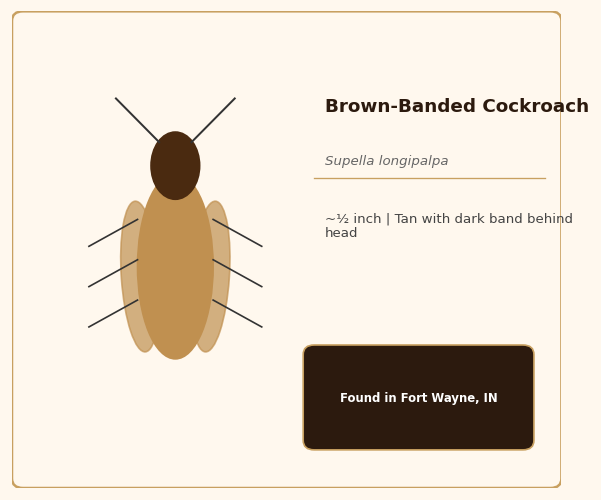
Brown-Banded cockroaches are similar in size to the German cockroach at about half an inch, and the two species are sometimes confused. The difference is in the markings — the Brown-Banded has a solid dark brown patch behind its head rather than the two stripe pattern. This species prefers drier conditions and tends to spread throughout a home rather than concentrating in the kitchen. They can be found in bedrooms, living rooms, and even inside furniture or electronics.
6. Smokeybrown Cockroach
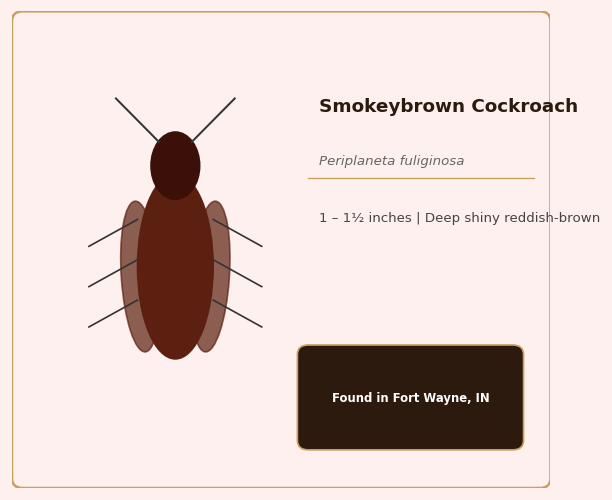
Less common in Indiana but occasionally seen, the Smokeybrown cockroach is a large, uniformly dark reddish-brown species about 1 to 1.5 inches in length. It’s primarily a Southern U.S. pest that may arrive in Fort Wayne via shipped goods or produce. It can be distinguished from the American cockroach by its single solid color (the American has a two-toned pattern).
7. Spotted Mediterranean Cockroach
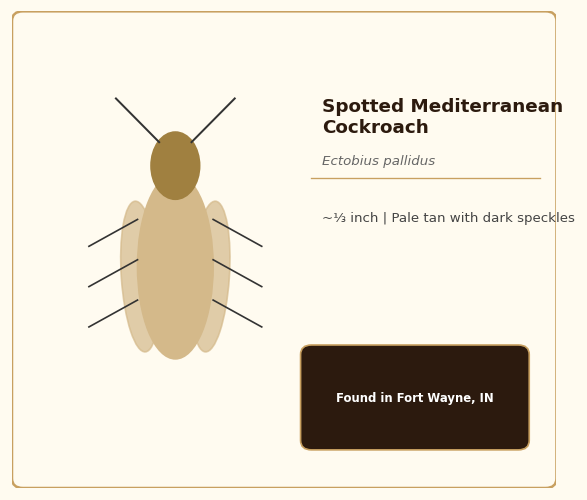
This is a very small roach — barely a third of an inch — with a pale tan body covered in small dark speckles. Originally from Europe, this species has expanded its range dramatically and is now found throughout Indiana. It primarily lives outdoors on vegetation and is unlikely to establish an infestation inside your home. However, like many outdoor roaches, it’s drawn to lights at night and may fly inside through open doors or windows.
8. Surinam Cockroach
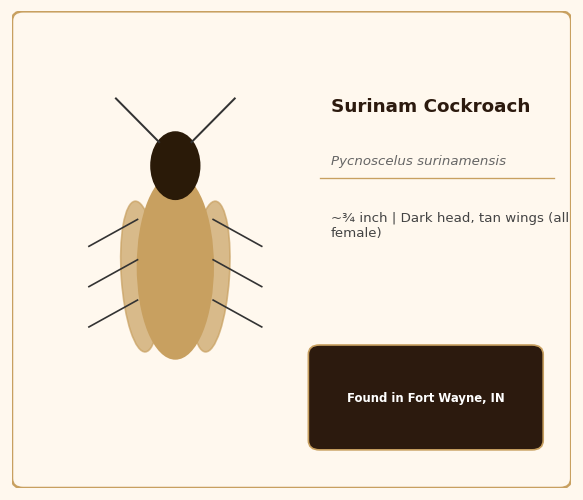
An unusual species in more ways than one: the Surinam cockroach is about three-quarters of an inch long, dark at the head, and tan-winged. Remarkably, the species consists entirely of females that reproduce without mating. They’re rarely encountered in the Fort Wayne area except inside greenhouses and atriums with heavy plant life. If you spot them outdoors in colder months, they almost certainly came from somewhere warm.
Why Do I Have Cockroaches in My Fort Wayne Home?
The answer depends largely on the species. In general, cockroaches find their way inside through three main pathways:
- Entry from outdoors through gaps, cracks, and unsealed vents — common with wood and Mediterranean cockroaches
- Access through sewer lines and plumbing — typical with American and Oriental cockroaches
- Hitchhiking on infested items — particularly with German cockroaches, which often travel in secondhand appliances, grocery bags, or moving boxes
Spotting a single cockroach doesn’t necessarily mean you have a full infestation — but it’s a warning sign that should not be ignored. Cockroaches are nocturnal and expert hiders. By the time you’re seeing them in the open during the day, the population behind the walls may already be substantial.
Are Cockroaches Dangerous?
Cockroaches won’t bite or sting, but that doesn’t mean they’re harmless. The health risks associated with a cockroach infestation are well-documented:
- Food contamination: Cockroaches that live near garbage, sewage, and decaying matter carry bacteria on their bodies and in their droppings — including pathogens linked to salmonella, E. coli, and dysentery.
- Asthma and allergies: Cockroach droppings, shed skin, and saliva are known allergens. In homes with an active infestation, these particles circulate in the air and can trigger asthma attacks, especially in children.
- Food poisoning risk: Their habit of crawling across food preparation surfaces and through pantries puts your household at direct risk of foodborne illness.
The larger and longer the infestation, the higher the health risk. Early intervention is always the smarter path.
How Do You Get Rid of Cockroaches in Fort Wayne?
This is where most homeowners struggle. Cockroaches are notoriously difficult to eliminate with store-bought sprays and traps. Here’s why:
- They hide in wall voids, under appliances, and in places consumer products can’t reach
- They’re nocturnal, meaning most DIY efforts only address the visible surface of the problem
- German cockroaches especially reproduce so rapidly that killing visible adults barely dents the population
- Some populations have developed resistance to common over-the-counter pesticide ingredients
Effective cockroach control requires a professional inspection to identify the species and locate harborage areas, followed by targeted treatment using professional-grade products and techniques. Gel baits, insect growth regulators, and residual treatments applied in the right locations can eliminate even severe infestations — but timing and placement matter enormously.
Maintaining clean dishes and food storage, eliminating moisture sources, sealing entry points, and keeping trash areas tidy are all helpful — but these steps support professional treatment, they don’t replace it.
Is Cockroach Treatment Safe for My Family and Pets?
Yes — when handled by a licensed professional. All products used by certified pest control technicians in Indiana are EPA-registered and applied according to strict label instructions. Before any treatment begins, your technician will walk you through any precautions specific to your household — such as temporarily securing food, keeping pets off treated surfaces, or ventilating certain rooms.
Professional treatment is far safer and more controlled than using heavy-handed consumer sprays in the wrong places.
How Can I Prevent Cockroaches From Coming Back?
Once your infestation is resolved, there are practical steps you can take to make your home far less attractive to cockroaches:
- Eliminate moisture: Fix leaky pipes, improve ventilation in bathrooms and basements, and don’t leave standing water
- Seal entry points: Caulk gaps around pipes, under doors, around windows, and in the foundation
- Store food properly: Keep dry goods in sealed containers; never leave food uncovered overnight
- Keep things clean and dry: Wipe down surfaces, clean appliances, and take out trash regularly
- Inspect incoming items: Check secondhand appliances, furniture, and grocery bags before bringing them inside
- Schedule preventive treatments: Periodic professional monitoring catches new activity before it becomes an infestation
Why Choose Fort Wayne Pest Control for Cockroach Removal?
When cockroaches move in, you need a team that knows Fort Wayne — not a national call center that dispatches whoever is available. Here’s what sets us apart:
- Locally Owned & Operated: We live and work right here in Fort Wayne, Indiana. We know the pest pressures in this city, the older construction that provides easy entry points, and the neighborhoods where cockroach calls are most common.
- Thorough Inspection First: We never guess. Every job starts with a proper inspection to identify the species, locate the harborage areas, and understand how they got in. Then we build a treatment plan around those findings.
- Professional-Grade Products, Safely Applied: The products we use aren’t available at the hardware store — they’re more effective and applied with precision. Everything is EPA-approved and safe for your family and pets when handled correctly.
- We Treat the Source, Not Just What’s Visible: Anyone can spray a kitchen. We find the nesting areas, seal the entry points, and treat the problem at the root so it doesn’t come back.
- 100% Satisfaction Guarantee: If cockroaches return between treatments, so do we — at no additional charge. We don’t close out a job until your home is genuinely pest-free.
- Fast Response: Cockroach infestations don’t wait, and neither do we. We offer same-day and next-morning appointments across Fort Wayne and Allen County.
Don’t let cockroaches put your family’s health at risk. Call Fort Wayne Pest Control today at +1 260-888-3947 or visit pestcontrolinfortwayne.com to schedule your inspection. We’ll identify what you’re dealing with and get rid of it — fast, safely, and for good.
Frequently Asked Questions
Q1. How do I know if I have a cockroach infestation or just a stray roach?
Spotting a single cockroach during the day is actually a red flag — cockroaches are nocturnal, so if one is visible in daylight it often means the hidden population has grown large enough to push them out. Other signs of a true infestation include small dark droppings that resemble coffee grounds or black pepper (especially in cabinets and behind appliances), a musty or oily odor in the kitchen or bathroom, shed skins near baseboards, and egg cases (small brown capsules) tucked into dark corners. If you notice any combination of these, call Fort Wayne Pest Control at +1 260-888-3947 for an inspection.
Q2. What is the most common cockroach found in Fort Wayne, Indiana homes?
The German Cockroach is by far the most common species found inside Fort Wayne homes and businesses. It is small (half to five-eighths of an inch), light tan with two dark stripes behind its head, and reproduces extremely rapidly. A single female can generate hundreds of offspring in her lifetime, which is why German cockroach infestations can explode in a matter of weeks. They are most often found in kitchens and bathrooms, particularly under and behind warm appliances like refrigerators, dishwashers, and ovens.
Q3. Can cockroaches make my family sick?
Yes — cockroaches are a genuine health concern, especially in larger numbers. They carry bacteria including salmonella and E. coli on their bodies and in their droppings, which they deposit across food preparation surfaces, inside cabinets, and near food sources. This can lead to food poisoning, diarrhea, and dysentery. Cockroach droppings, shed skins, and saliva are also well-documented allergens that can trigger asthma attacks — particularly dangerous for children. The longer an infestation goes untreated, the greater the health risk to your household.
Q4. Why do I keep seeing cockroaches even after using store-bought sprays?
Over-the-counter sprays only kill the cockroaches they directly contact — they do nothing about the egg cases, the nymphs hidden deep in wall voids, or the hundreds of roaches living behind your appliances and inside your cabinets. German cockroaches in particular have also developed resistance to many common pesticide ingredients found in consumer products. Professional treatment uses a combination of professional-grade gel baits, insect growth regulators (which break the reproductive cycle), and precision residual applications in harborage areas — methods simply not available at the hardware store.
Q5. How did cockroaches get into my home in the first place?
The entry point depends on the species. German cockroaches most commonly arrive by hitchhiking — inside secondhand appliances, moving boxes, grocery bags, or even furniture purchased from infested locations. American and Oriental cockroaches typically enter through sewer lines, floor drains, or cracked plumbing. Pennsylvania Wood and Spotted Mediterranean cockroaches wander in from outside, often attracted by exterior lights left on at night. A sudden large appearance of American cockroaches inside is frequently a sign that a nearby sewer pipe has cracked or a plumbing trap has dried out.
Q6. Are cockroach treatments safe for my children and pets?
Absolutely — when applied by a licensed professional. All treatments used by Fort Wayne Pest Control are EPA-registered and applied in strict accordance with label directions. Before treatment begins, your technician will walk you through any specific precautions for your home, such as storing exposed food, keeping pets off treated surfaces for a short period, or ventilating a room. Professional applications are targeted and controlled — far safer than the broad, uncontrolled use of consumer sprays in living spaces.
Q7. How long does it take to get rid of a cockroach infestation?
The timeline depends on the species and the size of the infestation. German cockroach infestations — the most common in Fort Wayne — typically require one to three professional treatments spaced over a few weeks to fully eliminate the population, including newly hatched nymphs from any remaining egg cases. Larger infestations or those that have been present for months may take additional follow-up. American cockroach problems tied to sewer access can often be resolved faster once the entry point is identified and sealed. Fort Wayne Pest Control will give you a realistic timeline after the initial inspection.
Q8. How can I prevent cockroaches from coming back after treatment?
Prevention comes down to eliminating the three things cockroaches need: food, water, and shelter. Keep kitchen surfaces clean and dry, store all food in sealed containers, fix leaky pipes and faucets, caulk gaps around plumbing and utility penetrations, and avoid leaving cardboard boxes or clutter on the floor. Inspect any secondhand appliances or furniture before bringing them inside. For long-term protection, Fort Wayne Pest Control offers ongoing treatment plans with scheduled visits that catch any new activity early — before a small problem becomes a full infestation again.