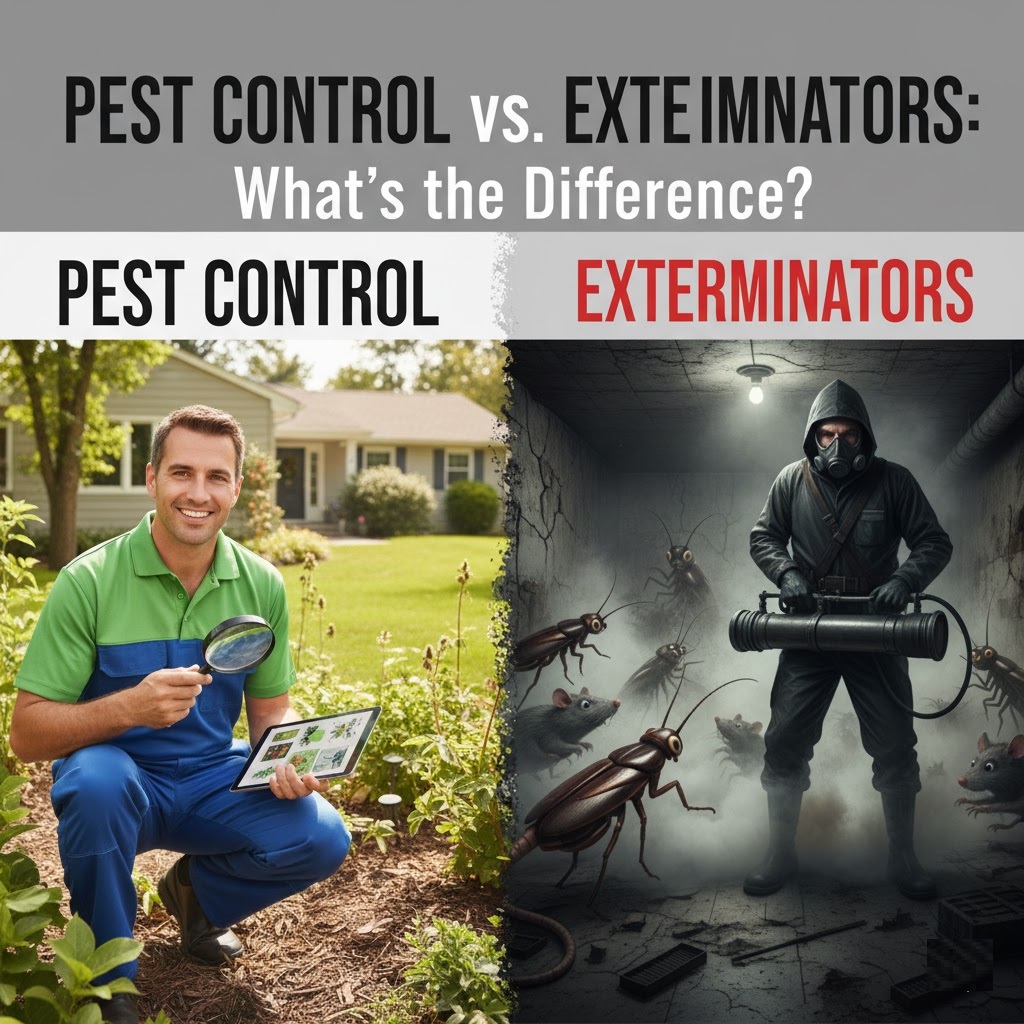
When pests invade your home or business, your first instinct might be to search for an “exterminator near me.” But here’s where things get confusing: is an exterminator the same as a pest control professional? While both deal with pest problems, their approach, methods, and long-term results are very different.
Traditionally, exterminators focus on one thing: killing pests as quickly as possible. They often use strong pesticides or chemicals to eliminate infestations. In contrast, pest control specialists combine inspection, prevention, and targeted treatment to address the root cause of pest problems, ensuring they don’t come back.
Understanding this difference is key to choosing the right service. Whether you’re facing termites, roaches, rodents, or bed bugs, it’s not just about exterminating the pests; it’s about protecting your home or workplace from future infestations. In this detailed guide, we’ll break down what each service offers, how they differ, and which option provides the safest and most effective long-term protection for your property.
1. What Does “Exterminator” Mean?
The word “exterminator” dates back decades, often used to describe professionals whose job was to eliminate pests by any means necessary. The focus was purely on eradication, usually through chemical treatments designed to kill insects or rodents immediately.
Exterminators typically work reactively; you call them after you’ve already noticed an infestation. They may use foggers, sprays, or bait stations to treat the visible problem. While these methods can be effective short term, they rarely address the underlying cause, such as entry points, moisture, or food sources.
Modern exterminators have evolved to include safer, more environmentally friendly methods, but the term still implies a “quick-fix” solution. This makes exterminators ideal for emergencies like a sudden roach outbreak or rodent invasion, but less suitable for those seeking long-term prevention or eco-friendly pest management.
2. What Does “Pest Control” Mean?
Pest control, on the other hand, takes a comprehensive, preventative approach. Instead of only targeting visible pests, pest control professionals aim to eliminate the root cause of infestations and keep pests away for good.
This process usually starts with a thorough inspection, followed by a customized treatment plan that may include:
-
Sealing cracks and entry points to block pest access.
-
Using traps, baits, and low-impact pesticides as needed.
-
Managing moisture and sanitation issues that attract pests.
-
Providing education and regular maintenance visits.
The goal of pest control is long-term protection, not temporary relief. Professionals rely on the principles of Integrated Pest Management (IPM), combining biological, physical, and chemical methods in the safest way possible. By using targeted treatments and preventative strategies, pest control companies can protect your home, family, and pets while maintaining environmental balance.
3. Key Differences Between Exterminators and Pest Control Professionals
Although the terms are often used interchangeably, there are several clear distinctions between exterminators and pest control specialists:
| Category | Exterminator | Pest Control Professional |
|---|---|---|
| Goal | Eliminate pests quickly | Manage and prevent future infestations |
| Approach | Reactive – treats active problems | Proactive – prevents problems before they start |
| Methods | Relies heavily on pesticides | Uses Integrated Pest Management (IPM) |
| Safety | It can involve harsh chemicals | Focuses on eco-friendly, low-impact solutions |
| Duration of Results | Short-term relief | Long-term prevention |
| Education | Often based on traditional methods | Backed by science, training, and monitoring |
In simple terms, exterminators are like emergency responders, arriving after the problem has exploded. Pest control professionals act more like preventive doctors, identifying conditions that cause infestations and addressing them before pests appear.
By choosing pest control over extermination, you invest in long-term health, safety, and peace of mind protecting your property, pets, and family in the process.
4. Why Modern Pest Control Is a Better Long-Term Solution
Today’s pest control is built on science, safety, and sustainability. Rather than flooding your space with chemicals, modern pest control companies use a combination of inspection, monitoring, and low-impact treatments to achieve lasting results.
Eco-friendly products, biological agents, and smart technology (like smart traps and pheromone monitors) allow for precision without overuse of pesticides. This protects both the environment and your indoor air quality.
Pest control experts also focus on education and prevention, teaching property owners how to keep pests from returning by improving sanitation, sealing access points, and eliminating attractants. Over time, this approach reduces costs, minimizes chemical exposure, and creates a more hygienic, pest-free environment.
So while extermination might seem like the quick fix, pest control provides the smarter, safer, and more sustainable path forward.
5. Cost Comparison and Service Expectations
When comparing exterminators and pest control professionals, one of the most noticeable differences lies in cost and long-term value.
-
Exterminators typically charge for single treatments, usually ranging from $150 to $400 per visit, depending on the pest and severity of infestation. This option is best suited for emergencies, for example, when roaches, wasps, or rodents have already invaded your home. However, since extermination rarely addresses the root cause, follow-up treatments are often required.
-
Pest control services, on the other hand, may seem more expensive at first usually $300 to $600 for initial treatment, but they include inspection, prevention, and maintenance plans. Regular visits keep pests away long-term and minimize chemical usage, offering more value over time.
Most homeowners find that consistent pest control saves them money by preventing costly damage, contamination, or reinfestations. It’s the smarter, safer, and more sustainable investment for both residential and commercial properties.
6. When to Call Pest Control vs. an Exterminator
If you’re dealing with a sudden outbreak like hornets, fleas, or rodents and need them gone immediately, call an exterminator for fast results. They’re equipped to handle urgent infestations and remove visible pests right away.
However, if you’re looking to prevent future infestations, manage seasonal pest issues, or ensure long-term home protection, a pest control company is the better choice. Pest control services focus on inspection, prevention, and ongoing maintenance rather than just elimination.
For best results, many homeowners combine both calling exterminators for emergency removal and using pest control specialists for continued prevention and monitoring.
Conclusion
When it comes to pest management, the choice between an exterminator and a pest control professional depends on your needs. If you’re facing an active infestation and need fast results, extermination provides immediate relief. But if your goal is long-term prevention, eco-friendly treatments, and a healthier environment, pest control is the smarter, more sustainable solution.
With advanced tools, modern techniques, and a focus on prevention, pest control services offer better results and peace of mind.
If you’re searching for professional pest control in Fort Wayne, our certified experts can inspect, treat, and maintain your property year-round.
Frequently Asked Questions (FAQs)
1. What is the main difference between pest control and extermination?
The biggest difference is that exterminators focus on quick elimination, while pest control professionals emphasize prevention and long-term management. Pest control uses science-based, eco-friendly strategies that not only remove pests but also stop them from returning.
2. Are exterminators still commonly used today?
Yes, exterminators are still called for urgent infestations or emergencies that require fast treatment. However, most modern companies now combine extermination with ongoing pest control methods to ensure complete and lasting results.
3. Which service is safer for pets and kids?
Pest control is generally safer because it uses targeted, low-impact treatments that minimize exposure to chemicals. Reputable pest control providers use EPA-approved solutions and apply them with precision for a pet- and child-friendly environment.
4. Does pest control use chemicals too?
Yes — but in smaller, more controlled doses. Pest control experts use chemicals only when necessary and often rely on integrated pest management (IPM), which prioritizes biological and physical methods before chemical applications.
5. How often should pest control be done at home?
Most homes benefit from quarterly treatments (every 3 months). However, properties in pest-prone areas or with recurring problems might require monthly visits for the best protection against infestations.
6. Which option is better for long-term pest prevention?
Pest control wins when it comes to long-term results. Regular maintenance, inspections, and preventive sealing ensure your property stays pest-free without repeated chemical exposure or costly re-infestations.
7. Is pest control more expensive than extermination?
At first glance, pest control may appear more costly. However, because it prevents future infestations, it actually saves you money in the long run by avoiding damage repairs and repeated emergency visits.
8. Can exterminators handle termites or bed bugs?
Yes, exterminators can treat severe termite or bed bug infestations, often using chemical or heat treatments. However, pest control specialists may provide ongoing termite monitoring systems and prevention plans to stop recurrence.
9. What is Integrated Pest Management (IPM)?
IPM is a modern pest control approach that combines monitoring, prevention, and minimal chemical use. It emphasizes environmental balance, managing pests through smart, sustainable strategies rather than harsh, repeated chemical applications.
10. When should I hire a pest control company?
You should contact a pest control company when you notice early signs of pest activity — droppings, small holes, strange odors, or insect sightings. The earlier you act, the easier it is to eliminate pests and prevent them from spreading.