Hornets are among the most aggressive stinging insects you might encounter around your home, and their presence often signals that a nest is nearby. If left undisturbed, a hornet colony can grow rapidly and pose a serious threat to your family, pets, and property. Their nests are often well-hidden in trees, rooflines, wall voids, or even underground, making them difficult to locate without close observation. That’s why identifying and safely removing a hornet nest as early as possible is critical for preventing painful stings and protecting your outdoor spaces.
Whether you’re noticing more hornets than usual or suspect there’s a nest forming around your home, it’s important to act with caution and preparation. This guide will walk you through how to recognize signs of hornet activity, where to search for nests, and the safest ways to handle removal, especially if you’re in the Fort Wayne area. With the right approach, you can keep your home safe while avoiding unnecessary risks.
What Does a Hornet Nest Look Like?
Hornet nests are unique in both structure and materials. Recognizing their appearance is the first step.
-
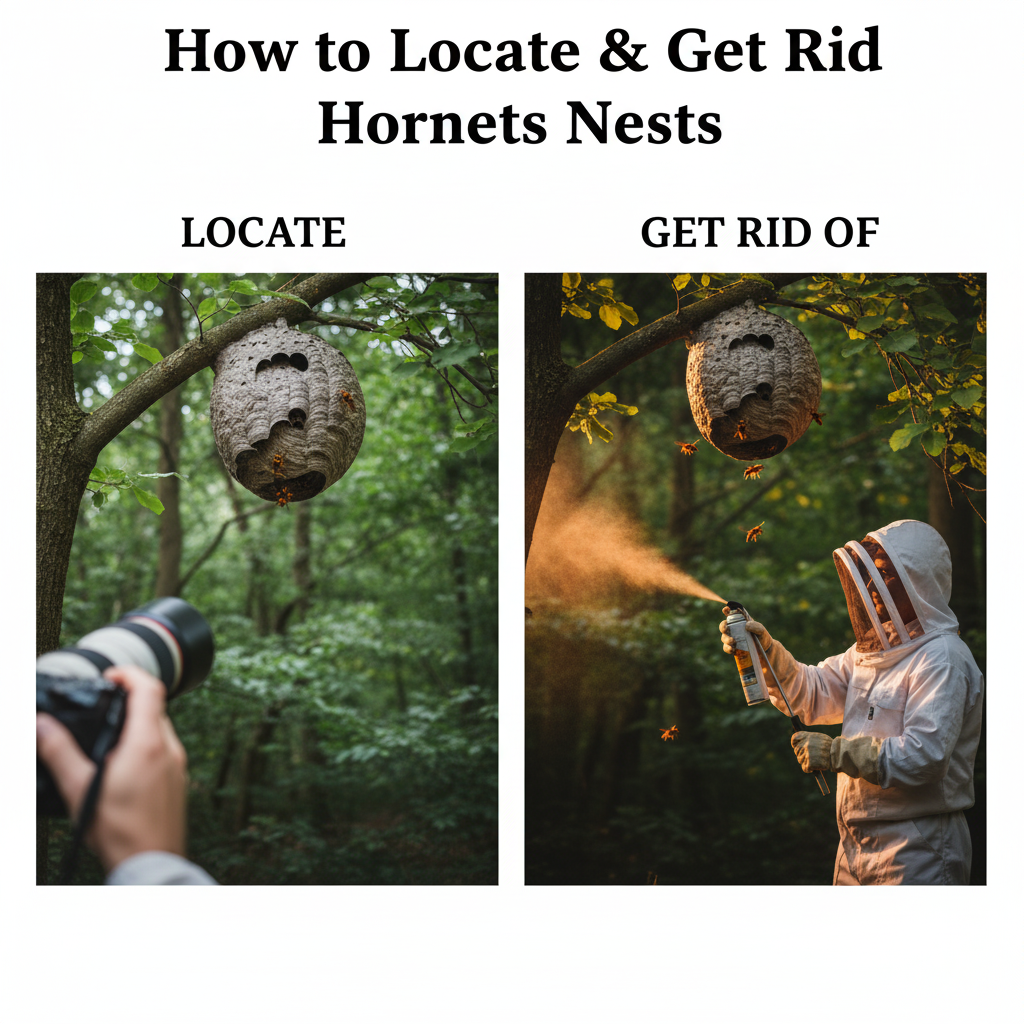
Paper-like, layered structure: Hornets chew wood fibers and mix them with saliva to make a pulp. Layer after layer builds the nest, resulting in a grey or brown papery shell.
-
Distinct entrance hole: Most nests have at least one opening near the bottom, allowing hornets to enter and exit.
-
Varying sizes: Early-season nests may be small—few inches wide—but over time, nests can grow to the size of a basketball or more, depending on colony strength.
If you see a round or oval, papier-mâché structure hanging from tree branches, under eaves, or tucked in wall voids, it may very well be a hornet nest.
Common Places to Find Hornets’ Nests
Hornets choose spots that are sheltered, less disturbed, yet accessible. Here are prime locations to check:
Garages & Sheds
The semi-open spaces and corners in garages or garden sheds can provide enough cover to support a nest. Pay attention to rafters, beams, or corners.
Burrows & Underground Sites
Some hornet species may colonize old rodent tunnels or holes in the ground, converting them into hidden nest sites.
Attics & Wall Voids
If they find cracks or gaps in roofing or siding, hornets may build nests inside attics or between walls where you might not easily see them—yet hear buzzing.
Trees, Shrubs & Window Ledges
Nests often hang in trees or shrubs or are affixed to the underside of roof overhangs, window ledges, or the underside of porch ceilings.
Keep in mind: the nest may be hidden from view initially. Watch for flight paths, listen for buzzing, and observe the insects, these clues will guide you.
How to Locate a Hornets’ Nest: Step‑by‑Step
1. Observe Flight Patterns
Watch hornets during the day (dawn or dusk when activity is lower). Note where they fly to and fro—that’s likely the nest. Their path often leads straight back to the nest entrance.
2. Use Bait or Lures
Place a piece of fruit or raw meat in a safe, visible spot. Hornets are attracted to protein sources, so if many hornets visit, you’re likely close to the nest.
3. Inspect Nooks & Crannies
Check corners of roofs, under eaves, behind siding, and inside hollow trees. Use binoculars if needed for high or hard-to-reach spots.
4. Listen at Night
At dusk or night, when activity slows, quietly approach possible nest areas and listen. You may hear faint buzzing or scratching in the walls, signs of nest movement.
How to Get Rid of Hornets’ Nests (Safely & Effectively)
Before attempting removal, assess the risk. If you’re unsure or allergic to stings—always call a professional. If you proceed, use these methods carefully and at the right time.
Method 1: Vacuum Removal
-
Use a shop vacuum with a long extension hose.
-
Wait until dusk or early morning when hornets are less active.
-
Insert the hose entrance toward the nest opening and suck up insects. The goal is to remove as many as possible before collapsing the structure.
Method 2: Chemical Spray Treatment
-
Use a high-quality insecticide labeled for hornets.
-
Spray directly into the entrance at dusk or dawn when hornets are reduced in number.
-
Saturate the nest thoroughly, then allow days to pass before removal.
-
Use protective gear (thick clothing, gloves, face/shield) and have an escape path.
-
For removal, enclose the nest in a large bag, detach carefully, pour insecticide again, seal the bag, and dispose responsibly (or burn if guidelines permit).
Method 3: Foam or Dust Treatments
For nests in wall voids or deep cavities, professionals often use foaming insecticide or dust insecticide that expands into hidden spaces. These penetrate deeper than sprays and reduce the need for full exposure.
Method 4: Professional Removal
-
For large nests, aerial nests, or structures too close to homes or children, hiring a licensed pest control company is the safest bet.
-
They have specialized tools, protective gear, and experience to remove nests with minimal risk.
-
Many professionals offer warranties or follow-up inspections to ensure the nest is fully eliminated.
Precautions & Best Practices
-
Never remove active nests during daylight. Hornets are aggressive when disturbed.
-
Maintain a safe distance, at least 20–30 feet away, until confident of nest inactivity.
-
Always wear protective clothing: thick, full-coverage, long sleeves, gloves, goggles, and a face shield or bee hood.
-
Keep children, pets, and others indoors or far away during any removal attempt.
-
Avoid swatting hornets or using bare hands—this triggers defensiveness and attracts others via pheromones.
When to Call a Professional
Call a pest control company if any of the following apply:
-
The nest is high, large, or in a structure’s wall, attic, or eaves.
-
You are allergic or uncomfortable with stings.
-
Previous removal attempts failed, or hornets reappear.
-
The nest is near high-traffic human areas (near doors, windows, play areas).
A professional can assess risk, use safer methods, and remove the nest securely with warranty support.
Frequently Asked Questions (3‑Line Format)
1. When is the best time to remove a hornet nest?
Removal is safest at dusk or dawn, when hornet activity is lowest and fewer workers are outside.
This timing minimizes the chance of mass attacks.
Attempting removal in midday is much more hazardous.
2. Can I use regular bug spray to treat a hornet nest?
Most off-the-shelf sprays are insufficient to penetrate nests or reach hidden chambered cells.
You need a heavy-duty, labeled insecticide designed for hornets, or professional-grade foam/dust.
Using weak sprays often provokes attacks without eliminating the nest.
3. How do I know if a nest is still active?
Watch the nest entrance for flying insects during daylight — active nests have consistent traffic.
Listen at dusk for buzzing or movement sounds from inside the structure.
If weeks pass with no activity, it may be abandoned—but still proceed with caution.
4. Are all hornet nests built above ground?
Not necessarily, while many nests are aerial, some species use ground burrows or cavities.
They may repurpose rodent tunnels or soil holes as nest sites.
Always investigate both ground and elevated locations in your inspections.
5. Will removing one nest prevent new ones from appearing?
No, new queens may start fresh infestations next season if conditions are ideal.
To reduce recurrence, seal entry points and keep the property maintained.
Ongoing vigilance and preventive steps are essential year after year.
6. Can hornets become more aggressive after I spray insecticide?
Yes, provoking them or using insufficient treatment can agitate workers.
They release pheromones to summon reinforcements when threatened.
Thorough treatment and quick retreat reduce this risk.
7. Is burning the nest a safe disposal method?
Burning may be effective but is risky and may not be allowed in all areas.
Only consider burning where local regulations and safety conditions permit.
Otherwise, seal the nest in a bag and dispose via approved waste services.
8. How far should I be when removing or inspecting a nest?
Stay at least 20–30 feet away until you’re confident of nest inactivity.
Move slowly, avoid direct line of sight, and maintain an escape route.
Never let curiosity or underestimation bring you too close too soon.
Conclusion: Protect Your Home Carefully
Locating and removing a hornet’s nest is a task that demands patience, care, and respect for the danger involved. When done properly—at the right time, with protective gear, and the right methods—you can remove nests safely. But never underestimate the risk.
If you’re unsure, dealing with a large or hard-to-reach nest, or allergic to stings, calling a licensed pest control professional is the wisest decision. They’ll ensure the nest is eliminated and your property remains safe with minimal risk