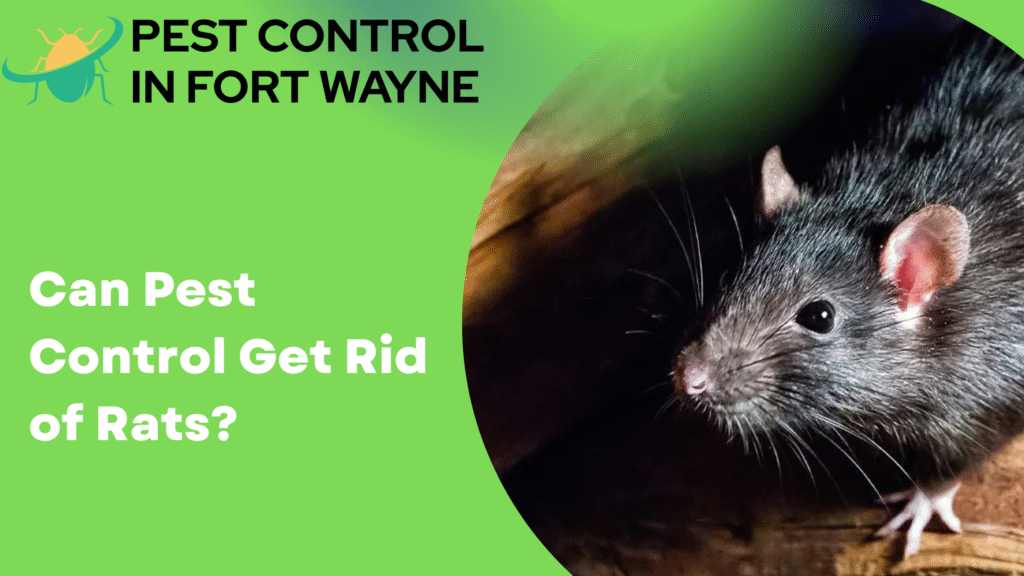
Rats are among the most persistent pests homeowners face. They chew through wiring, spread disease, contaminate food, and can reproduce quickly, making even a small problem escalate rapidly. So you might wonder: Can pest control really get rid of rats? Or will they always come back?
In this article, we’ll explore how professional pest control addresses rat infestations, what techniques are used, how effective they can be, what you as a homeowner need to do, and what results you can expect, especially if you’re in Fort Wayne, Indiana. The aim is to help you understand what it takes to rid your home of rats or keep them from coming back.
Understanding the Rat Problem
Before tackling rats, it’s essential to understand them.
- Types of Rats: Common rat species include Norway rats (also called brown rats), roof rats, and in some regions, other local species. Each behaves differently: where they nest, how high they climb, and how they gain entry.
- Behavior and Biology: Rats are nocturnal; they hide in walls, ceilings, and basements. They reproduce quickly; female rats can have several litters in a year. They require food, water, and shelter, and are opportunistic feeders.
- Why They’re Hard to Eliminate: They hide well, they can squeeze through very small holes (¼ inch or so), they often reproduce in hidden places, and if even one pregnant female remains, the infestation can restart.
- Damage & Health Risks: Rats transmit diseases (salmonella, leptospirosis, hantavirus), contaminate food, cause structural damage by gnawing wood or wires, cause noise and unpleasant odors, and generally reduce the comfort and safety of a home.
What Pest Control Usually Does to Get Rid of Rats
Professional pest control has tools, methods, and expertise to tackle rat infestations. Here’s what they usually do:
- Inspection & Assessment: First, technicians inspect both the interior and exterior of your property to find rat entry points, nesting sites, droppings, runways, and damage. They may use tools like flashlights, moisture meters, sometimes cameras or thermal imaging to locate hidden nests.
- Sealing / Exclusion: Once entry points are found, pest control companies seal cracks, holes, vents, pipe openings, gaps in roofing, spaces under doors, etc. This is crucial if you kill rats but leave access, more will return.
- Trapping: Professionals will often set traps snap traps for quick kills, live-traps in some cases, and glue boards where appropriate. Traps are placed along rat runways (rats tend to travel along walls) and where rat activity is highest.
- Baiting / Rodenticides: Poison baits are used in secure bait stations. These are chosen carefully to be effective yet safe, placed so that children, pets, and non-target animals are not at risk. Professionals use rodenticides permitted by regulations. They may use anticoagulant baits or other types depending on severity and local laws.
- Environmental & Sanitation Work: Removing the rats’ food, water, and shelter is key. Cleaning up spills, storing food in sealed containers, removing debris, trimming vegetation near foundations, eliminating standing water, and securing trash bins all reduce what rats need to survive.
- Monitoring & Follow-up: After the initial treatment, pest control providers will monitor the property. They check traps and bait stations, look for new signs of rat activity, and revisit if needed. Some may offer maintenance plans or warranty periods.
Effectiveness: Can They Eliminate Rats Completely?
So, can pest control really make your rat problem go away? Mostly, yes but with some caveats.
- What “Eliminate” Means: If you mean reduce the population to virtually zero so you no longer see rats or hear them, pest control can do that. But permanently zero is harder: if environmental conditions favor rats, new ones can enter.
- Factors That Affect Success: The size and duration of the infestation (how long rats have been there), how well access/exclusion work is done (are all entry points sealed?), cooperation from the homeowner (sanitation, removing attractants), structural vulnerabilities of the building, weather, and how frequent follow-ups are.
- Timeframes for Results: Often, significant reductions are seen within days to a couple of weeks: traps catch active rats; bait reduces numbers. Full elimination (especially for large infestations) may take several weeks or multiple visits. Exclusion work may be ongoing.
- Risk of Reinfestation: Quite real. Even after a successful treatment, if entry points are not fully sealed, or if new food/water/shelter becomes available, nearby rat populations can re-enter. Regular maintenance, inspections, and vigilance are required to keep rats away long-term.
What to Look for in a Rat Pest Control Service
If you decide to hire a professional, choose carefully for the best results.
- Credentials & Experience: Licensing in Indiana, experience in rodent control is essential. Ask for references or examples of previous rat work.
- Safety Practices: Ensuring treatments are safe for children, pets, and non-target wildlife. Using bait stations, using chemicals only as needed, providing clear safety instructions.
- Humane / Ethical Methods: Some customers prefer non-lethal traps or live capture, or minimal poison use. See if the company offers these choices.
- Guarantees & Follow-ups: Does the company guarantee its work? Are follow-up visits included? What happens if rats return?
- Local Knowledge: A Fort Wayne-based company will know which rat species are common locally, what materials/building types tend to have vulnerabilities, what climate/season effects you face, and what local regulations exist.
Methods Used: Pros & Cons
Here are common methods and their advantages/disadvantages:
| Method | Pros | Cons / Limitations |
| Snap Traps | Fast kill, inexpensive, no poison; immediate feedback (you see the catch) | Need proper placement; must check regularly; may require many traps; visible dead rats can be unpleasant |
| Live Traps | Humane option; captures without killing | Requires monitoring; you must decide what to do with captured rats; may not be legal everywhere; stress for the animal; may not be feasible for large infestations |
| Glue Boards / Adhesive Traps | Useful in tight spaces; inexpensive | Can be considered inhumane; rats may suffer; less effective for large infestations; risks if non-target animals get stuck |
| Bait Stations / Rodenticides | Very effective; can reach hidden rats; good for larger infestations; poison can kill multiple rats from one bait station | Risk to pets/kids; need secure placement; requires regulatory compliance; poison might lead to odor if rats die in walls; some rats develop resistance |
| Exclusion / Sealing | Prevents re-entry; addresses root cause; no poison needed; often cost-effective long term | Can be labor intensive; may require repairs; must be thorough (missing even small holes can allow rats) |
| Natural / Non-Chemical Deterrents (e.g., peppermint oil, ultrasonic devices etc.) | Low hazard; good supplementary measures; helpful for prevention | Less reliably effective for severe infestations; often must be continuously applied; smells or devices may be bothersome; might not kill rats, just repel |
Fort Wayne, IN Context
Understanding local conditions helps in assessing how likely pest control will succeed.
- Common Rat Species Here: In Fort Wayne, Norway rats (that burrow around foundations and feed a lot on ground level) are common; roof rats or similar may also appear, especially in attics or walls. <br>
- Seasonal Behavior: During cold winters, rats seek shelter indoors; during warm, humid summers, they are active outdoors and indoors for food and nesting. Freeze-thaw transitions can cause cracks in the foundation or doors that rats exploit. <br>
- Building Types & Vulnerabilities: Older homes, basements, crawlspaces, sheds, detached garages,and porches are all potential entry points. Homes with siding, vents, poorly sealed roofs, or gaps under doors are more vulnerable. <br>
- Climate Impacts: Humidity, precipitation (snow, rain) can affect where rats nest; melting snow or heavy rains cause leaks or moisture inside structures, which rats like; freezing temperatures may force rats indoors.
Costs & What You Should Expect
Understanding what you’ll pay and what’s required is important.
- Typical Cost Range: For a modest rat infestation in a typical single-family home in Fort Wayne, expect a baseline rodent control service cost (inspection + traps + sealing minor entry points + follow-up) to run from a few hundred to perhaps several hundred dollars. More severe infestations, multiple buildings, or major exclusion work increase cost. <br>
- What Influences Cost: Size of the property; how bad infestation is; how many entry points; whether structural repairs are needed to seal access; whether poison or advanced traps are required; number of follow-ups; whether ongoing monitoring is included. <br>
- Preparation by Homeowner: Be ready to remove clutter, clear areas for inspection, remove stored items near walls or in basements, secure pets, remove or safely store food; perhaps temporarily vacate areas if heavy chemical treatments are used. <br>
- What the Service Includes: Usually an inspection, treatment plan, execution (traps, bait, sealing), follow-ups to check for remaining activity, advice on prevention, warranty or guarantee period where the service returns if rats reappear.
Frequently Asked Questions
Here are common questions people ask, with detailed answers (at least three lines each):
Can pest control eliminate rats from my house?
Yes if the infestation isn’t too large and the service is done thoroughly, pest control can eliminate rats from a house. However, complete elimination means not only killing or removing existing rats but also sealing off all entry points, eliminating food/water sources, and doing follow-ups. Without these preventive steps, rats can return from neighboring areas or through unseen gaps.
How long does it take for a pest control service to get rid of rats?
The timeline varies. For mild infestations, you might see fewer rat sightings within a week or two after treatment. But if the infestation is more established deep nests, lots of hiding places, and many rats it can take several weeks or even more than a month with multiple treatments and monitoring. Exclusion work and sanitation often take extra time as well.
Is using poison safe in rat control? What precautions are taken?
Professional pest control companies use rodenticides (poison) very carefully. They place them in secure bait stations so that children, pets, and non-target animals can’t access them. They follow local regulations on which chemicals are allowed, ensure proper application, and minimize risks. They will also provide instructions on what to do during and after treatment, like cleaning up dead rodents safely.
Will traps alone be enough to solve the problem?
Maybe for small infestations or a few rats, yes; traps can be very effective. But for larger or hidden infestations, traps alone often aren’t enough. Rats can escape detection, or new ones can get in. Combining traps with exclusion (sealing holes), baiting, environmental changes (removing shelter, food), and monitoring greatly improves success.
What preventive steps should I take so rats don’t come back?
Key preventive measures include sealing all gaps and holes in foundations, walls, vents, roofs, and doors; making sure food and trash are securely stored; removing water sources and fixing leaks; reducing clutter in basements, attics, and garages; trimming vegetation away from house exteriors; and keeping compost bins or pet food sealed. Regular inspections help spot new vulnerabilities.
Do rats pose health risks? Should I worry while waiting for pest control to work?
Yes, rats can carry serious health risks. They can spread bacteria (e.g. Salmonella), parasites (fleas, ticks), and other pathogens through their droppings, urine, saliva, or fleas. Also, they can contaminate food and surfaces. While waiting for pest control to take full effect, you should avoid direct contact with droppings, wear gloves while cleaning, sanitize surfaces, and ensure food is covered properly.
What if these rats come from neighboring houses or sewers?
That’s a common scenario. Rats are mobile and will move through connected sewer lines, under fences, over roofs, and through utility lines. That’s why excluding entry points and sealing vulnerabilities is so important. Also, addressing the broader environment (e.g., trash, standing water, open access in yards) both on your property and encouraging neighbors to do likewise helps reduce chances of reinfestation.
Do natural or non-chemical deterrents work for rats?
They can help, especially as prevention or supplementary tools. Examples are peppermint oil, ultrasonic repellers, natural predators (e.g. cats or encouraging wildlife), strong smell deterrents,and traps. But in many cases of established infestations, these alone are not sufficient to eliminate rats. They are best used alongside professional treatments and exclusion work.
How much will rat control cost me in Fort Wayne?
Costs vary depending on the size of the infestation, how many rats, how many entry points to seal, the size of the house or property, the methods used (traps, bait, exclusion, poison), and how many follow-ups are needed. Based on local estimates, expect a basic treatment to cost somewhere in the lower hundreds of dollars; more complex jobs (multiple structures, heavy infestation, major sealing or structural repair) cost significantly more. Always get multiple quotes and a breakdown of what is included.
How do I know if a pest control company is good for rat extermination?
Look for a company that is licensed in Indiana to handle rodenticides, has experience solving rat problems, offers a guarantee or follow-ups, uses safe bait stations, provides clear treatment plans, and shows you where rats are getting in or where nests are. Check reviews, ask for references, see how transparent they are about safety for children/pets, and whether they emphasize preventive work (sealing, sanitation) not just killing rats.
Conclusion
Yes professional pest control can get rid of rats. But the key is that it must be done thoroughly: inspection, trapping/poisoning, exclusion of entry points, sanitation, and follow-ups. Without all those pieces, rats often return.
If you live in Fort Wayne and suspect rats in your home (droppings, noises, gnaw marks, burrows), don’t wait. Contact a trustworthy local pest control service that specializes in rodent removal. Have them do a full inspection and give you a treatment plan. Early action means less damage, less worry, and better results.