You notice tiny insects with wings near your windows or lights, and suddenly panic sets in. Are they harmless ants or destructive termites? Many homeowners struggle to spot the difference between flying ants and termites, especially during swarming season when both insects look similar from a distance.
This guide will help you understand the key differences, warning signs, and what steps you should take if you suspect termites in your home.
Why People Confuse Flying Ants And Termites
Both insects appear during warm and humid weather, and both can fly during certain stages of their life cycle. This is why homeowners often mistake one for the other.
The confusion usually starts when people notice groups of insects around windows, doors, or outdoor lights. While winged ants are mostly a nuisance, termites can quietly damage wooden structures for months before anyone notices.
Knowing the difference early can save you from expensive repairs and long term structural issues.
What Is The Difference Between Flying Ants And Termites
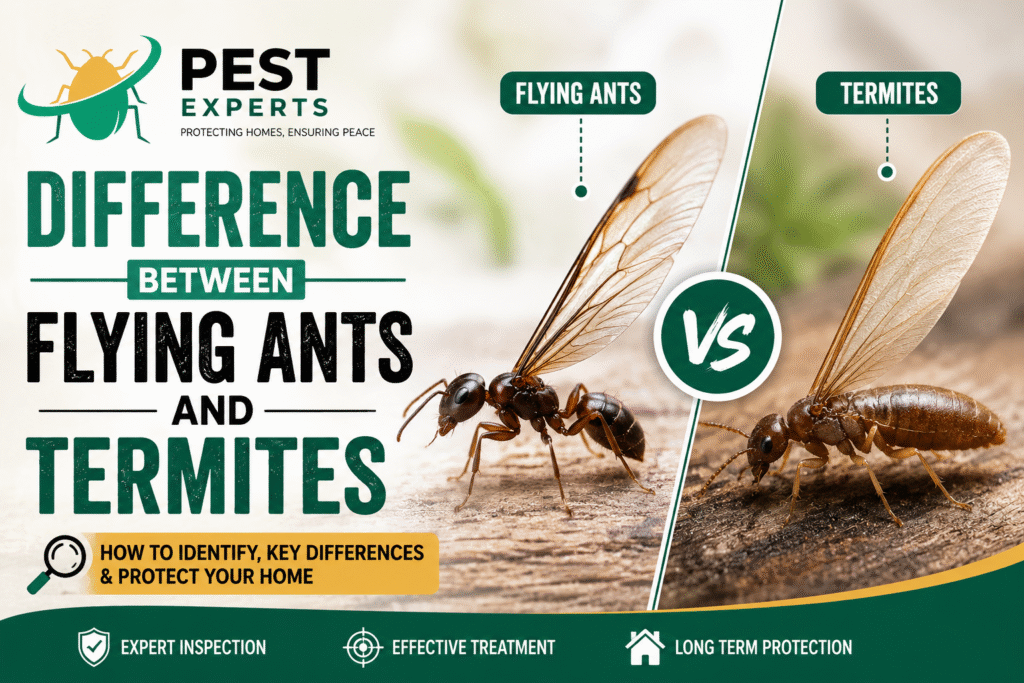
The easiest way to understand the difference between flying ants and termites is by looking at their wings, body shape, and antennae.
Quick Answer
Here is a simple comparison homeowners can use:
- Termites have straight antennae and thick waists
- Ants have bent antennae and narrow waists
- Termites have equal sized wings
- Ants have larger front wings and smaller back wings
These small details make identifying them much easier.
Differences In Wings
One of the clearest ways to compare flying ants vs termites is by examining the wings closely.
Termites have two pairs of wings that are equal in size and length. Their wings are longer and more uniform in appearance. Ants, on the other hand, have front wings that are noticeably larger than the back pair.
You may also notice discarded wings around windowsills if termites have recently swarmed.
Differences In Body Shape
Body shape is another important clue when learning how to identify termites correctly.
Ants have a very defined waist that makes their body look segmented. Termites have straighter bodies with no visible narrowing in the middle.
If you look closely, termites appear softer and lighter in color compared to ants.
Differences In Antennae
Ant antennae are bent or elbow shaped. Termites have straight antennae that look more bead like.
This small feature is often overlooked, but it is one of the easiest ways to separate flying ants vs termites during a close inspection.
Differences In Behavior
Termites prefer dark, moist environments and usually stay hidden inside wood or underground. Ants are more visible and often search openly for food.
Another difference is the way they swarm. Termite swarmers usually appear in large numbers after rain or warm weather conditions. Their main goal is to establish new colonies nearby.
How To Identify Termites In Your Home
Spotting termites early can prevent major structural damage. Homeowners who understand how to identify termites are more likely to catch infestations before repairs become expensive.
Common Signs Of Termite Activity
Some of the most common signs of termite infestation include:
- Hollow sounding wood
- Mud tubes near walls or foundations
- Discarded wings near windows
- Bubbling paint or damaged wooden surfaces
- Tight fitting doors and windows
These warning signs should never be ignored.
Where Termites Hide
Termites are experts at staying hidden. They often live behind walls, beneath flooring, inside crawl spaces, and around damp wood.
Homeowners usually do not notice them until visible damage appears. By then, the colony may already be well established.
One of the biggest termite damage signs is weakened wood that crumbles easily when touched.
When To Schedule A Professional Inspection
If you notice swarming insects indoors or visible wood damage, scheduling a termite inspection is a smart next step.
Professional inspectors know where termites hide and can identify early warning signs that homeowners may miss. Regular inspections are especially important in areas with warm and humid climates.
Flying Ants Vs Termites Quick Comparison
Simple Comparison Answer
When comparing flying ants vs termites, remember these key differences:
| Feature | Flying Ants | Termites |
|---|---|---|
| Antennae | Bent | Straight |
| Waist | Narrow | Thick |
| Wings | Uneven sizes | Equal sizes |
| Color | Darker | Light brown or cream |
| Damage Risk | Low | High |
This quick comparison helps homeowners identify the insect more confidently.
What Damage Can Termites Cause
Termites feed on cellulose found in wood and other materials. Over time, they can weaken support beams, flooring, furniture, and walls.
The longer termites remain unnoticed, the greater the repair costs become. Some infestations can even affect the structural safety of a property.
This is why recognizing the difference between flying ants and termites matters so much for homeowners.
How Professional Help Protects Your Home
Professional pest control services provide more than just surface treatments. Experts inspect hidden areas, locate colonies, and create customized treatment plans based on the severity of the infestation.
Many homeowners attempt DIY solutions first, but termites are difficult to eliminate completely without proper equipment and experience.
A professional termite inspection can confirm whether the insects are termites or harmless ants before damage spreads further.
Why Homeowners Trust Pest Control in Fort Wayne Pest Experts
Homeowners often rely on experienced professionals because termite activity can escalate quickly.
Companies offering residential pest control understand local pest patterns and know how to stop infestations before they worsen. Trusted experts also provide preventive recommendations to help reduce future risks.
In severe infestations, specialized termite treatment services may be needed to fully eliminate colonies hidden within walls or foundations.
Prevention Tips To Keep Termites Away
Preventing termites starts with reducing moisture and limiting wood contact near your home.
Helpful prevention tips include:
- Fix leaking pipes and drainage issues
- Store firewood away from the foundation
- Seal cracks around windows and doors
- Keep gutters clean
- Schedule regular inspections
Homeowners who use preventive pest control services often reduce the risk of long term termite problems.
You should also watch for termite swarmers during spring and summer months since swarming activity may indicate a nearby colony.
Understanding the difference between flying ants and termites can help you act quickly before major damage occurs.
Frequently Asked Questions
1. Are flying ants dangerous?
Flying ants are generally more annoying than dangerous. They may gather around lights and windows during swarming season, but they usually do not cause serious structural damage.
The main issue is that people often confuse them with termites. Proper identification is important so you can respond appropriately.
2. How can I tell if I have termites or ants?
You should check the antennae, waist shape, and wing size. Termites have straight antennae, thick waists, and equal sized wings.
Ants have bent antennae and narrow waists. Looking at these details closely usually helps identify the insect correctly.
3. Do termites always have wings?
No, termites only have wings during their swarming stage. These reproductive termites leave the colony to create new colonies nearby.
After swarming, they often shed their wings. Finding piles of wings indoors can signal termite activity nearby.
4. When do termite swarmers appear?
Termite swarmers usually appear during warm and humid weather, especially after rain. Spring and early summer are common swarming periods in many regions.
Swarming often happens during daylight hours near windows, doors, or outdoor lights.
5. Can flying ants damage wood?
Flying ants themselves do not usually damage wood like termites do. However, carpenter ants may tunnel into damp wood to build nests.
Even though the damage differs, it is still wise to inspect any insect activity around wooden structures.
6. What attracts termites to homes?
Termites are attracted to moisture, wood, and dark environments. Leaking pipes, damp crawl spaces, and untreated wood increase the risk of infestation.
Homes with excess moisture around foundations are especially vulnerable to termite activity.
7. Should I call pest control for flying ants?
If you are unsure whether the insects are ants or termites, contacting a professional is a smart idea. Proper identification can prevent unnecessary stress and costly mistakes.
Experts can inspect the property and determine whether treatment is needed.
8. How often should I get a termite inspection?
Most experts recommend a yearly inspection, especially in termite prone regions. Regular inspections help detect activity before major structural damage occurs.
Homes with previous infestations or moisture problems may benefit from more frequent inspections.
Conclusion
Understanding the difference between flying ants and termites can help homeowners avoid serious property damage and unnecessary worry. While flying ants are usually harmless, termites can quietly destroy wooden structures if left untreated.
By learning the physical differences, watching for warning signs, and acting quickly when problems appear, you can protect your home more effectively. If you suspect termite activity, professional guidance can make all the difference in preventing costly repairs later.