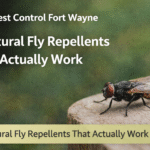
Every summer in Fort Wayne, Indiana, the same thing happens: the temperatures climb, the windows go up, and the flies move in. Whether it is house flies circling the kitchen, fruit flies hovering over the fruit bowl, or cluster flies sneaking into the garage, these pests are among the most persistent and frustrating insects homeowners deal with all season long.
The good news is that you do not need to reach for chemical sprays every time a fly appears. There are genuinely effective natural repellents that can reduce fly pressure inside and outside your home — plants, household ingredients, and simple techniques that work with your environment rather than against it. The even better news is that most of them are inexpensive, safe around children and pets, and easy to set up.
In this guide, we cover the 5 most effective natural fly repellents, how to use each one properly for maximum results, what attracts flies to Fort Wayne homes in the first place, and the point at which natural methods alone are no longer enough.
Why Fort Wayne Homes See More Flies in Summer
Flies are cold-blooded insects, which means their activity level is directly tied to temperature. During Indiana winters, fly populations largely die off or enter a dormant state. As spring arrives and temperatures in Allen County begin climbing into the 60s and 70s, fly eggs that were laid in the soil, in organic debris, and in standing matter begin hatching. By the time Fort Wayne summers are in full swing, a new generation of flies is active, feeding, and reproducing fast.
The house fly lifecycle is remarkably quick. Under warm conditions, a fly can develop from egg to adult in as little as 7 to 10 days. An adult female can lay up to 500 eggs in her lifetime across multiple batches, and those eggs hatch within 24 hours when temperatures are warm enough. This is why a fly problem can feel like it escalates almost overnight — because biologically, it can.
Fort Wayne’s humid summers create ideal breeding conditions for multiple fly species. Standing water after rain, organic yard waste, outdoor pet waste, and uncovered food waste are the four biggest attractants for flies looking to breed close to your home.
Understanding what draws flies in is half the battle. The repellents below work best when combined with removing the sources that attract flies in the first place — an important distinction we will come back to at the end of this post.
5 Natural Fly Repellents That Actually Work
1. Basil and Other Pungent Herbs
Flies navigate almost entirely by smell. Their olfactory system is highly sensitive, and certain aromatic compounds found in common herbs are genuinely disruptive to that system. Basil is the most well-known and widely used natural fly deterrent, but it is far from the only herb that works.
How it works: The volatile oils in basil — primarily linalool and estragole — are detected by flies as a warning signal. The scent does not kill them; it simply creates an environment they prefer to avoid. The repellent effect is most pronounced when the plant is healthy and actively releasing its oils, which is why a living potted basil plant is significantly more effective than dried basil from the spice rack.
How to use it: Place potted basil plants on kitchen windowsills, near back door entrances, and on outdoor patio tables where flies tend to gather. For best results, lightly bruise a few leaves periodically by rubbing them between your fingers — this releases more of the volatile oil into the air. Replace or refresh plants when they start to bolt or become woody.
Other herbs with documented fly-repelling properties include mint (peppermint and spearmint), rosemary, lavender, and rue. A mixed herb planter near your outdoor entertaining area can create a pleasant-smelling, fly-discouraging barrier that also doubles as a cooking garden.
Fort Wayne Tip: Basil grows extremely well in Indiana summers. Start seeds indoors in April and transplant after the last frost — you will have healthy, full plants through the peak fly season from June through August.
2. Lavender Oil and Lavender Plants
Lavender is one of the most versatile natural fly repellents available, and it is effective in multiple forms — living plants, dried bundles, and essential oil. Its primary active compound, linalool, is shared with basil but exists in much higher concentrations in lavender, making it particularly potent as a fly deterrent.
How it works: Flies have chemoreceptors on their feet and mouthparts that are highly sensitive to linalool. The scent of lavender disrupts their ability to locate food sources and triggers an avoidance response. Research has also shown lavender oil to be effective against several species of biting insects, making it a multi-purpose natural deterrent during Fort Wayne’s outdoor season.
How to use it: There are several ways to deploy lavender effectively around your home. Grow lavender plants along the border of your patio or near exterior doors — the plants are hardy in Indiana’s USDA zone 5/6 conditions and come back reliably each year. Place dried lavender bundles in small cloth bags and hang them in doorways, inside screened porches, or near windows. Mix 20 to 30 drops of lavender essential oil with a cup of water in a spray bottle and mist doorframes, window sills, and countertops every few days.
Lavender oil can also be applied to cotton balls and placed in strategic locations — behind appliances, inside trash can lids, and near fruit bowls — for targeted repellent coverage. The oil breaks down over several days, so refresh the cotton balls every three to four days for continuous effectiveness.
Fort Wayne Tip: English lavender varieties such as Hidcote and Munstead are the most cold-hardy for Indiana winters and will return reliably each spring. Plant in full sun with well-drained soil for the strongest scent production.
3. Cloves and Citrus
The combination of cloves and citrus is one of the oldest natural fly repellents in documented use, and it earns its reputation. Both ingredients contain compounds that flies find intensely unpleasant, and together they create a repellent effect stronger than either alone.
How it works: Cloves contain eugenol, a compound that interferes with fly sensory receptors and creates a strong avoidance response. Citrus fruits — particularly lemons, limes, and oranges — contain limonene in their rinds, a natural insect repellent compound. When combined, the two scents amplify each other’s effectiveness.
How to use it (the classic method): Cut a lemon in half and press 10 to 15 whole cloves, tip-first, into the cut surface of each half. Place these near food preparation areas, on outdoor dining tables, or anywhere flies tend to congregate. Replace every two to three days as the citrus dries out and the essential oil compounds dissipate.
Extended use with citrus peels: Fresh orange, lemon, or grapefruit peels placed along windowsills and door thresholds create an aromatic barrier that deters flies from entering. Refresh every one to two days while the peels are still moist and fragrant. Dried peels lose their effectiveness quickly.
For a longer-lasting version, simmer orange peels with whole cloves in a small pot of water on the stove during outdoor gatherings. The rising steam carries the repellent compounds throughout the room and out nearby open windows, creating a zone that flies actively avoid. This also works well on a covered porch or patio.
Pro Tip: During Fort Wayne’s peak outdoor entertaining months of June through August, keep a small dish of fresh citrus peel and cloves on the picnic table or outdoor kitchen counter. Refresh before each gathering for consistent protection.
4. Apple Cider Vinegar Trap
The previous three repellents focus on keeping flies away from areas you want to protect. The apple cider vinegar trap takes the opposite approach: it attracts flies to a specific location and catches them there. Used together with repellents, it dramatically reduces the total fly population inside your home.
How it works: Flies — particularly fruit flies and house flies — are strongly attracted to the fermented smell of apple cider vinegar, which mimics the scent of overripe fruit and fermenting organic matter. A small amount of dish soap breaks the surface tension of the liquid, preventing flies that land on the surface from escaping.
How to set it up: Pour roughly two tablespoons of apple cider vinegar and a few drops of liquid dish soap into a glass or cup. Stir gently to combine without creating foam. Cover the top tightly with plastic wrap and use a toothpick or pencil to poke five to eight small holes in the surface — large enough for a fly to crawl through, small enough that they cannot easily escape. Place near fruit bowls, garbage cans, and any area where you are seeing fly activity.
For heavier infestations, multiple traps placed around the kitchen, near recycling bins, and by exterior doors will work together to significantly reduce the population within 24 to 48 hours. Replace the solution every three to four days or sooner if it fills with trapped flies.
A variation that works particularly well for drain flies — a common problem in Fort Wayne homes during summer — is pouring a small amount of apple cider vinegar directly down affected drains, followed by a flush of boiling water. The vinegar draws drain flies down and the hot water breaks up the organic buildup they breed in.
Pro Tip: Place the trap near the problem area but not directly next to the food you are trying to protect. You want to draw flies toward the trap, not toward your fruit bowl.
5. Essential Oil Repellent Spray
A homemade essential oil spray is one of the most flexible and customizable natural fly repellents available. It combines multiple active compounds into a single application that can be refreshed quickly and used on surfaces throughout the home.
How it works: Essential oils like eucalyptus, peppermint, lemongrass, tea tree, and cedarwood all contain volatile organic compounds that disrupt fly sensory systems. When combined and diluted in a water or alcohol base, they create a surface and air treatment that creates a genuinely inhospitable environment for flies without any synthetic chemicals.
Basic recipe: In a small spray bottle, combine 1 cup of water, 1 tablespoon of rubbing alcohol or witch hazel (as an emulsifier to help the oil mix with water), 15 drops of eucalyptus oil, 10 drops of peppermint oil, and 10 drops of lemongrass oil. Shake well before each use and spray on windowsills, door frames, countertops, garbage can lids, and any surface near which flies are active. Reapply every 48 to 72 hours.
For outdoor use, increase the oil concentration slightly and spray around the perimeter of patio doors, along deck railings, and near outdoor trash and compost areas. The alcohol helps the spray adhere slightly to surfaces rather than evaporating immediately, extending the active period of each application.
- Eucalyptus oil is particularly effective against cluster flies, which are a common late-summer problem in Fort Wayne homes as they seek warm shelter before the temperatures drop.
- Peppermint oil works well in kitchen and pantry areas and is safe around food surfaces when properly diluted.
- Lemongrass oil has been studied specifically for its repellent effect on house flies and has shown strong results at concentrations above 10 percent.
Safety Note: Always dilute essential oils before applying to surfaces. Undiluted oils can stain wood finishes and countertops, and some oils can be irritating to pets — particularly cats, which metabolize certain essential oil compounds differently than dogs or humans. Consult your vet if you have cats before using essential oil sprays indoors.
Make Natural Repellents More Effective: Removing What Attracts Flies
Natural repellents work best when the conditions that attract flies to your home are also addressed. No herb plant or essential oil spray will hold the line indefinitely if flies have strong attractants nearby. In Fort Wayne homes, the most common fly attractants are:
- Uncovered outdoor trash cans and recycling bins — especially during summer heat, which accelerates the decomposition of food waste and intensifies odors that draw flies from a significant distance
- Standing water in gutters, plant saucers, bird baths, and low areas of the yard — any standing water that sits for more than 48 hours becomes a potential fly breeding site
- Outdoor pet waste left unattended — one of the most significant fly breeding attractants in residential yards across Allen County
- Overripe or rotting fruit left on kitchen counters or fallen fruit in the yard
- Organic debris such as grass clippings, leaf piles, and compost bins located close to the house
- Gaps around doors and windows without properly fitted screens — flies do not need a large gap to enter, and worn or torn window screens allow significant fly traffic
Addressing even two or three of these attractants alongside your natural repellents will produce noticeably better results than repellents alone.
When Natural Repellents Are Not Enough
Natural fly repellents are genuinely effective for managing light to moderate fly pressure around a home. But there are situations where the volume or persistence of flies signals an underlying problem that natural methods cannot resolve on their own.
If you are seeing large numbers of flies consistently inside your home despite using repellents, if flies are appearing in unusual locations like around light fixtures, in the attic, or emerging from wall voids, or if you have tried multiple natural approaches for several weeks without reduction — these are signs that flies are breeding somewhere close by, often inside the structure itself or in a large organic source directly adjacent to the home.
Cluster fly infestations in attics and wall voids, drain fly problems in plumbing, and blow fly activity linked to a deceased animal inside a wall are all situations where professional pest control is the appropriate response. These are not problems that essential oil sprays or herb planters can address.
Why Fort Wayne Pest Control Is Your Partner for a Fly-Free Home
Natural repellents are a great first line of defense, and we genuinely recommend using them. But when flies become a persistent problem in your Fort Wayne home or business, our team provides the professional identification, source elimination, and targeted treatment that natural methods alone cannot deliver. Here is why Fort Wayne residents trust us:
- Local Expertise: We know the specific fly species active in Allen County throughout the season — from spring fungus gnats to late-summer cluster flies — and we treat each species with the right approach for lasting results.
- Source Identification: The most important step in eliminating a fly problem is finding where they are breeding. Our technicians inspect the full structure and exterior environment to identify breeding sources that homeowners rarely locate on their own.
- Safe, Targeted Treatment: Every product and method we use is EPA-registered and applied precisely, keeping your family and pets safe throughout the process.
- Fast Service Across Fort Wayne: We serve all Fort Wayne ZIP codes and surrounding Allen County communities with same-day and next-morning appointments available.
- Guaranteed Results: If pest activity returns between scheduled visits, we come back at no additional charge. Your satisfaction is not just a promise — it is our standard.
Whether you need advice on keeping flies away naturally or you are dealing with a fly problem that has grown beyond what home remedies can handle, Fort Wayne Pest Control is ready to help. Call us today at +1 260-888-3947 or visit pestcontrolinfortwayne.com to schedule your inspection.
Frequently Asked Questions — Natural Fly Control in Fort Wayne, Indiana
Q1. Do natural fly repellents actually work, or are they just home remedies?
The most effective ones — basil, lavender, cloves, apple cider vinegar traps, and essential oil sprays — have genuine scientific backing. These plants and compounds contain volatile organic compounds that disrupt fly sensory systems and trigger avoidance responses. They are not as immediately powerful as chemical insecticides, but when used consistently and correctly, they create a genuinely less hospitable environment for flies. The key is understanding their limits: natural repellents reduce and discourage fly activity, but they do not eliminate an active breeding population. For heavy infestations or flies breeding inside the structure, professional treatment is the appropriate next step.
Q2. What is the most effective natural fly repellent for indoor use?
For general indoor use, a homemade essential oil spray combining eucalyptus, peppermint, and lemongrass oils in a diluted water and alcohol base provides the broadest coverage and can be refreshed quickly on surfaces throughout the kitchen and living areas. For targeted fly capture, an apple cider vinegar trap is the most effective single tool for reducing the existing population inside your home. For persistent coverage near food areas and kitchen windows, a living basil plant provides continuous low-level repellent activity without any ongoing effort.
Q3. Why are there so many flies in my Fort Wayne home in the summer?
Fort Wayne’s warm, humid summers create ideal conditions for fly reproduction. Most fly species are dormant or at very low population levels through Indiana winters, and the spring and early summer warmth triggers mass hatching from eggs laid the previous fall. The house fly can develop from egg to reproducing adult in as little as one week under warm conditions, meaning populations can grow very quickly. Common breeding sources near Fort Wayne homes include uncovered trash and recycling bins, outdoor pet waste, standing water, and rotting organic material in yards and garden beds.
Q4. Is lavender oil safe to use around pets and children?
Lavender oil is generally considered safe around dogs and children when properly diluted in a water or alcohol base before applying to surfaces. The important exception is cats — cats lack a specific liver enzyme needed to metabolize linalool (the primary active compound in lavender oil), and repeated exposure to concentrated lavender oil can cause toxicity in cats. If you have cats in your home, keep lavender oil sprays out of areas where cats spend significant time or consult your vet before use. Dried lavender plants and living lavender plants pose minimal risk compared to concentrated essential oil.
Q5. How long do natural fly repellents last before needing to be refreshed?
The lifespan of each repellent varies. Living herb plants like basil and lavender provide continuous coverage as long as the plant is healthy and actively growing — typically the full Indiana growing season from late May through September. Essential oil sprays on surfaces stay active for roughly 48 to 72 hours before the volatile compounds evaporate and need reapplication. Fresh citrus peel and clove arrangements remain effective for one to three days depending on temperature and humidity. Apple cider vinegar traps should be replaced every three to four days or sooner once they fill with trapped flies.
Q6. What types of flies are most common in Fort Wayne homes?
The house fly is the most frequently encountered species in Fort Wayne homes throughout the summer. Fruit flies appear whenever there is overripe fruit, fermented liquids, or organic buildup in drains. Drain flies (also called moth flies) are small fuzzy flies that breed in the organic film inside household drains and are common in kitchen and bathroom drains during warm months. Cluster flies are a late-summer and fall species that seek warm shelter inside walls and attics as temperatures drop, often emerging in large numbers inside the home during warm winter days. Each species requires a slightly different approach for effective control.
Q7. Can I use these natural repellents outdoors as well?
Yes — and outdoor use is often even more impactful than indoor use because it creates a barrier that reduces how many flies reach the structure in the first place. Plant basil, lavender, and mint along patio borders and near exterior doors. Use a stronger essential oil spray concentration (double the oil per cup of water) on deck railings, outdoor trash can lids, and around the perimeter of outdoor dining areas. Clove and citrus arrangements on outdoor tables keep flies away from food during gatherings. Replace and refresh more frequently outdoors, as sun and wind break down the active compounds faster than in sheltered indoor settings.
Q8. When should I call a pest control professional for a fly problem instead of using natural methods?
Natural repellents are appropriate for managing light to moderate fly activity during Fort Wayne’s summer season. You should call a professional when: you are seeing large numbers of flies daily despite using multiple natural methods consistently for more than two weeks; flies are appearing inside in unusual locations such as around ceiling light fixtures, from wall voids, or in rooms far from food sources; you suspect a deceased animal inside a wall or crawl space (a common source of sudden blow fly or bottle fly activity); or drain fly activity persists after cleaning and treating your drains. These situations indicate an active breeding source that natural repellents cannot address, and professional inspection and treatment is the right response. Call Fort Wayne Pest Control at +1 260-888-3947 for an honest assessment.